

Collection & Sourcing
From Fabric Sample to Bulk Production – A Checklist for Buying Teams
The colour, fabric weight, width, hand, approval record and lead time checks buying teams need when approving a fabric sample and moving to bulk production.
- Published:
- Last updated:
- Reading time
- 8 min read
Contents
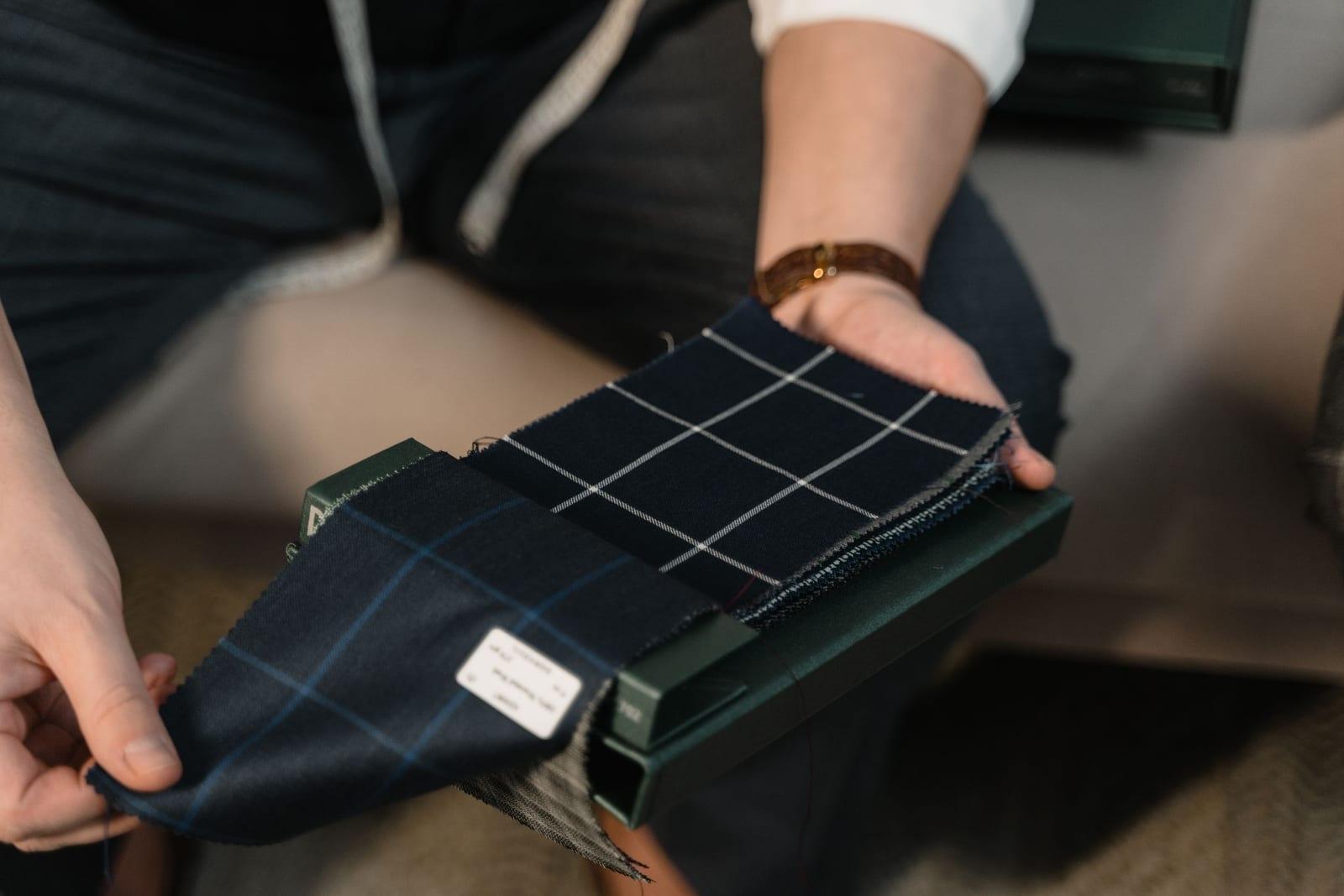
Liking a fabric sample does not mean that bulk production will run smoothly. Disputes between sample and bulk production often stem not from the fabric itself but from the fact that what was approved was not recorded clearly enough: which sample, which colour and which weight were approved, by whom and on what date?
This guide brings together in a single list the points that buying and collection teams should check on the way from the sample stage to the bulk production order. The list is a general framework; every company may have its own quality procedures, testing requirements and approval steps. We recommend using these points alongside your own internal procedures.
Short Answer
When moving from sample to bulk production, the buying team should confirm the sample code, colour, composition, fabric weight, fabric width, hand and surface appearance in writing, carry out trials that reflect how the product will actually be used, and record the approval together with the date, the person approving and the reference sample. Quantity and lead time should then be finalised, and it should be confirmed in writing with the manufacturer that bulk production will follow the approved sample. Because test methods and acceptance tolerances vary from company to company, both parties should clearly define these criteria before the order is placed.
Summary
- Every sample should be tracked by a unique code, and the approval should be linked to that code.
- Colour, composition, fabric weight and width should be confirmed as written technical data, not verbally.
- An approved reference piece (retained sample) should be kept for hand and surface appearance.
- Wear trials should be planned around the product and the conditions in which the fabric will actually be used.
- The approval record, quantity and lead time should be brought together in a single document.
- Quality criteria and tolerances are company-specific and should be clarified with the manufacturer in advance.
Technical Details to Check at the Sample Stage
Sample code
Different colour, pattern or finish variations of the same fabric quality can easily be mixed up. Every sample should have a code assigned by the manufacturer, and that code should be used in all correspondence. If you also use your own internal coding, keeping the two codes matched in a single table saves you from asking "which sample did we approve?" further down the line.
Colour
Colour assessment can vary with lighting conditions. Note the light under which you assessed the sample and, where possible, make comparisons under the same conditions as the manufacturer. When you give colour approval, keep part of the approved piece as a reference. How much colour deviation will be accepted in bulk production should be discussed before the order is placed, in line with your company's quality standard.
Composition
Composition shows the proportions of the fibres in the fabric and directly affects its hand, care and behaviour in use. It also matters for label information and cost. Get the composition details supplied with the sample in writing and make sure the same wording appears in the bulk production order. Our fabric composition guide covers the subject in more detail.
Fabric weight
Fabric weight is the weight of the fabric per square metre (g/m², GSM). The acceptable difference between the weight of the sample and that of the bulk fabric is a point on which both parties need to agree. You can find out what fabric weight does and does not affect in our GSM / fabric weight guide.
Width
Fabric width is critical information for the cutting plan and marker efficiency. Bear in mind that the full width and the usable width may not be the same; state clearly in the order which value is to be used as the basis.
Visual and Tactile Assessment
Hand
Hand is how a fabric feels to the touch: softness, fullness, slipperiness, stiffness and so on. Because it is hard to measure, approval is mostly based on comparison. That is why a reference piece should always be kept when hand is approved, and the bulk fabric should be assessed side by side with it.
Surface and appearance
This covers pattern placement, surface effect, lustre or matt appearance, weave-related variations in appearance and possible defects. A small sample piece may not always fully reflect how the fabric looks across larger lengths; where possible, it is worth carrying out the assessment on a larger piece.
Wear Testing and Trial Garments
A sample may look good on the table but behave differently once it has been made into a product. Depending on the product the fabric is intended for, you can plan steps such as a trial garment, washing or ironing trials, fittings and an assessment of shape. Which tests are carried out, and by which method they are measured, depends entirely on the company's quality procedure and the product's intended use. If laboratory testing is required, define the scope of testing and who will assess the results before the order is placed.
Control Points Table
The table below is an example of how responsibility for each check might be divided. Adapt it to your own organisational structure.
| Control point | What to check | Who approves? (example) |
|---|---|---|
| Sample code | The code is the same in all correspondence and in the order | Purchasing |
| Colour | Match with the reference piece, assessment lighting | Collection / design |
| Composition | Written information matches the order document | Purchasing, quality |
| Fabric weight | Sample value and the agreed acceptance range | Quality |
| Width | Full and usable width, fit with the cutting plan | Production planning / pattern room |
| Hand | Comparison with the reference piece | Collection / design |
| Surface / appearance | Pattern, surface effect, visible defects | Quality |
| Wear test | Trial garment, care trial, fitting results | Quality, pattern room |
| Approval record | Date, approver, approved sample code | Purchasing |
| Quantity and lead time | Order quantity in metres, delivery schedule | Purchasing, production planning |
Approval Record, Quantity and Lead Time
A verbal approval can easily lead to a "what did we approve?" debate once the bulk delivery arrives. The approval record should include at least the following: the approved sample code, the date of approval, the person who gave the approval, the approved technical values and any conditional approval notes (such as "colour to be one shade darker").
Quantity and lead time should also be tied to the same document. Until the total quantity in metres, any split into lots, the delivery date and the shipping method have been clarified, it is difficult for the manufacturer to draw up a realistic plan. Lead time varies with the manufacturer's workload and the construction of the fabric, so the date to work to should be one mutually confirmed with the manufacturer rather than an estimate. Our guide to the technical brief for contract manufacturing explains in detail what information should be given to the manufacturer before ordering.
Bulk Production Confirmation
The final step before bulk production begins is written confirmation that production will follow the approved sample. At this stage, some companies request a piece from the first production lot (a pre-production sample) and compare it with the reference sample. Whether this step is needed, and how it is carried out, again depends on the company's own procedure. For an overview of how the production process works, visit our production page.
Checklist
- Sample code received and matched to the internal code
- Colour approved, assessment lighting noted, reference piece kept
- Composition information received in writing
- Fabric weight value and acceptance range agreed with the manufacturer
- Full and usable width confirmed
- Hand compared with the reference piece
- Surface and appearance inspected on a sufficiently large piece
- Wear test / trial garment completed and results recorded
- Approval record created with date, approver and sample code
- Order quantity and lot plan finalised
- Lead time mutually confirmed with the manufacturer
- Confirmed in writing that bulk production will follow the approved sample
- Additional steps in the company's own quality procedure completed
If you would like to take your approved sample into bulk production, or discuss price and lead time based on a sample you already have, you can send us your quote request with the sample code, target quantity and your delivery expectations. The Arkadaş Tekstil team will review your request and get in touch with you.
Frequently Asked Questions
Will the bulk fabric be exactly the same as the sample?
The aim is for bulk production to match the approved sample. However, small differences in properties such as colour, weight and appearance can occur from lot to lot. That is why the acceptable difference should be agreed in writing with the manufacturer before the order is placed.
How long should I keep the reference sample?
There is no general rule. In practice, it is useful to keep the reference piece at least until the bulk delivery has been received and checked, and for longer if there is a chance of a repeat order. The retention period is determined by your company's quality procedure.
Which wear tests should I have carried out?
This depends on the type of product, its conditions of use and your company's quality requirements. A trial garment and a care trial are common first steps; if laboratory testing is required, its scope should be defined before the order is placed.
Is it a good idea to give conditional approval?
Conditional approval is common in practice; what matters is that the condition is measurable and in writing. Instead of "make it a little softer", clearly specifying the reference piece to compare against and the expected result reduces the risk of disputes.
Related Guides
Production
What Information Should You Give Your Manufacturer Before Contract Manufacturing Starts?
A practical brief checklist of product, fabric, quantity, sample, lead time, quality and shipment details to give a manufacturer before contract manufacturing.
8 min read
Fabric Knowledge
What Is GSM / Fabric Weight?
GSM is the weight of a fabric in grams per square metre. How to read g/m², how it differs from thickness and what to request alongside it when buying.
8 min read
Collection & Sourcing
How to Choose Fabric Composition
How to choose fabric composition, covering how wool, polyester and blends behave, care expectations, the cost/performance balance and sample evaluation.
9 min read