

Fabric Knowledge
What Is Suiting Fabric? What to Look for When Choosing It
How to assess fibre composition, weight, hand, drape and season when choosing suiting fabric. A sample and information guide for sourcing teams.
- Published:
- Last updated:
- Reading time
- 8 min read
Contents
A suit is one of the products that reveals both the look and the behaviour of a fabric most clearly. The jacket must fall cleanly from the shoulder, the trousers must hold their shape all day long, and the lapel and trouser hem must hold a press. For this reason, choosing a suiting fabric requires far more than marking a favourite shade on a colour card.
This guide summarises in plain language which criteria collection, sourcing and production teams should consider when evaluating suiting fabric, how to read a sample, and which information they should request from the supplier in writing.
Short Answer
Suiting fabric refers to fabrics chosen for suits in which the jacket, trousers and waistcoat are made up together: they are mostly woven, hold their shape and have a smooth, even surface. The choice should not be made on pattern or colour alone. Fibre composition, fabric weight, hand (handle), drape, season, frequency of wear and the intended shape of the garment must be assessed together. Wool, polyester and various blended fabrics meet different performance and cost targets; the right choice depends on who the product is made for, for which season and for which price bracket.
Summary
- Suiting fabric describes an end use, not a fibre type; the common expectation is that it holds its shape and takes a press well.
- Fibre composition directly affects hand, creasing behaviour, ease of care and cost.
- Fabric weight is an important indicator for season and shape, but it is not a measure of quality on its own.
- Hand and drape can only be assessed reliably with a physical sample.
- The sourcing team should obtain composition, weight, width, colour, finish and lead time information in writing.
What Does Suiting Fabric Mean?
In the trade, the term "suiting" describes not which fibre a fabric is made from, but the purpose it will be used for. The expectation is that the fabric looks good in both the jacket and the trousers at the same time, can be controlled during cutting and sewing, takes shape under the iron and keeps that shape throughout wear.
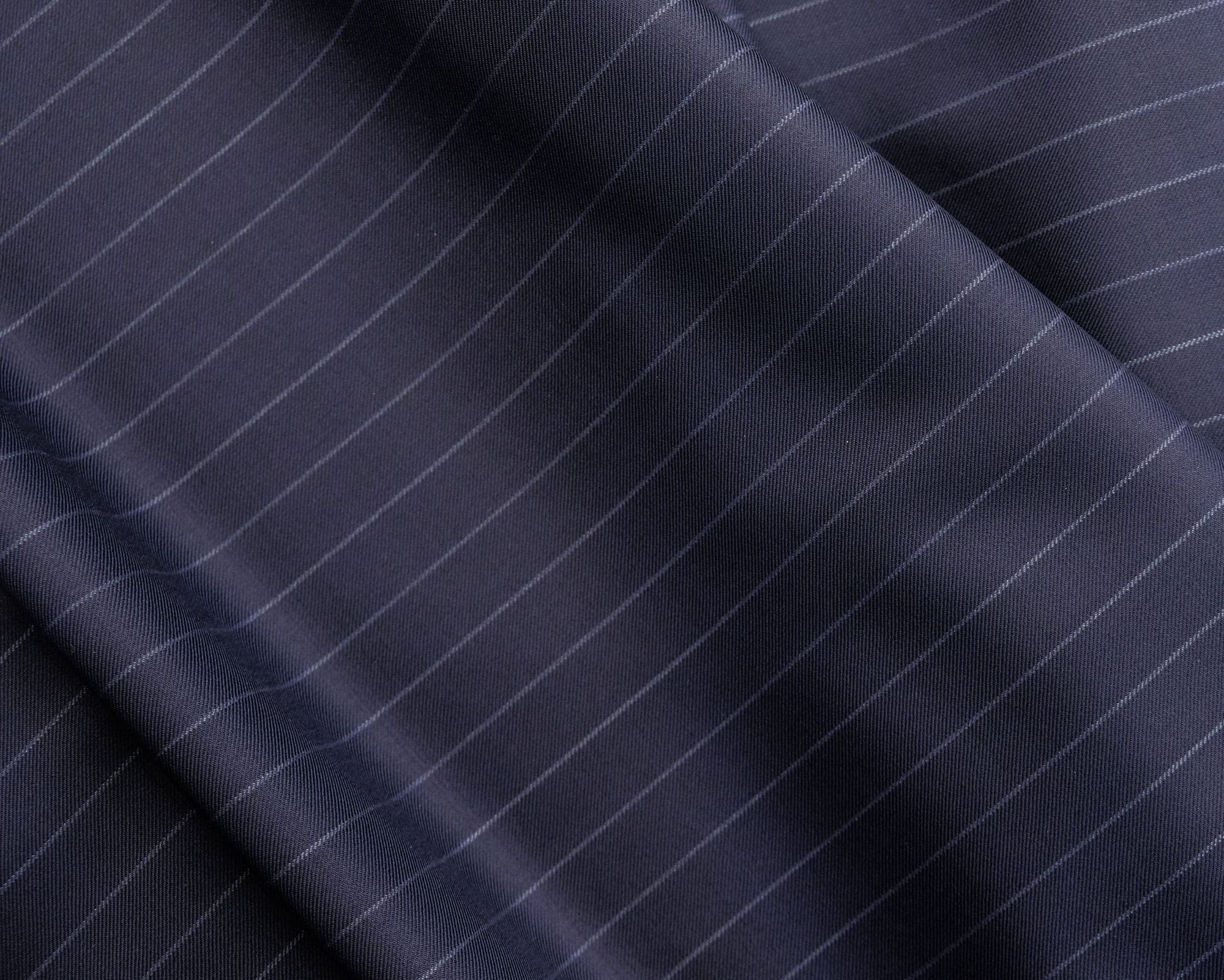
These fabrics are mostly woven. Twill and plain weave, together with their derivatives, are commonly used constructions. Plain colours, pinstripes, herringbone, houndstooth, small checks and patterns with a subtle surface effect are frequently seen in suit collections. Classic business suits, modern-cut suits, ceremonial wear and jacket-and-trouser separates are typical uses for this group. You can browse different composition and texture options in the suiting fabrics section.
Why Does Fibre Composition Matter?
Fibre composition refers to the type and proportion of the fibres that make up the fabric and is usually stated as percentages. Two fabrics in the same colour and pattern can behave very differently in the hand, on the hanger and in wear if their compositions differ.
| Composition approach | Key characteristics | Points to watch |
|---|---|---|
| Wool | Natural hand, good drape, shapes easily under the iron, breathability | Cost is generally higher; care sensitivity varies with the construction |
| Wool blends | Aim to improve crease resistance and durability while keeping the feel of wool | The blend ratio and yarn quality change the hand noticeably |
| Polyester and polyester blends | Shape retention, easy care, cost/performance balance | Feel in hot weather and any tendency to glaze under the iron should be checked on the sample |
| Constructions with added elastane | Comfort in movement and stretch | Recovery after stretching and sewing behaviour should be tested |
Which approach is right depends on how often the product will be worn, the target customer, care expectations and the price bracket. We look at the effect of fibre choice on product behaviour in more detail in the choosing fabric composition guide.
What Does Fabric Weight Change?
Fabric weight is the weight of the fabric per unit area and is usually given in g/m² (GSM). Bear in mind that for suiting fabrics some suppliers quote the weight per running metre (linear metre); when comparing two fabrics, make sure the unit and the fabric width are on the same basis.
As a general tendency, lighter fabrics offer a more fluid fall and cooler wear, but they are more sensitive to the choice of interlining and lining. Heavier fabrics give a fuller look and a more defined shape, and are more comfortable to wear in cold weather. Even so, two fabrics of the same weight can feel completely different depending on yarn fineness, weave density and finishing processes. There is therefore no universal "right weight". For the basics, see the GSM and fabric weight guide.
What Are Hand and Drape?
Hand (handle) is the feel of the fabric when touched: it is described with terms such as soft, firm, dry, slippery, full or cool. Fibre type, yarn twist, weave construction and the finishing treatments applied to the fabric determine the hand.
Drape describes how the fabric falls under its own weight and how it forms folds when released. Whether a jacket sits cleanly across the back and at the hem, and whether the trouser leg falls cleanly, is largely a matter of drape.
The two are linked but not the same thing: a fabric with a very soft hand may not carry the shape a suit requires. Three simple checks can be carried out on the sample:
- Hold the fabric vertically and watch how it falls and folds.
- Crumple a corner in your palm for a few seconds, release it and observe how it recovers.
- Touch both the face and the back; in lined garments the feel of the back side also matters.
Summer and Winter Use
For summer suiting, lighter fabrics with a more open construction and a cool hand are generally preferred; breathability comes to the fore. In winter fabrics, fuller constructions, brushed surfaces and wool or wool-blend compositions are more common. The backbone of many collections, however, is formed by medium-weight fabrics that can also be worn between seasons.
Suitability for a season is not determined by the thickness of the fabric alone. Fully lined or half-lined make-up, the choice of interlining and the garment pattern also change how the garment feels in wear. We cover this subject separately in the choosing summer and winter fabrics guide.
How to Evaluate on the Basis of a Sample
Photographs and screens are not enough to evaluate a suiting fabric. When the sample arrives, the following steps are useful:
- Check the colour both in daylight and under shop or office lighting.
- If there is a pattern, consider how the stripe spacing and check size will look on the garment pattern.
- Do a pressing test on a small piece; check for glazing or crushing of the surface.
- If possible, have a sample garment made up; seam slippage and needle marks only show up in sewing.
- Record the sample code, the date and your evaluation notes.
Keep the approved sample as a reference. Small differences in shade and hand can occur between the lab or pre-production sample and the bulk production lot; agreeing the acceptable range at the outset makes the subsequent process easier.
What Information Should the Sourcing Team Request?
Having the following information confirmed in writing when talking to the supplier makes both quote comparison and bulk production control easier:
- Quality name and sample code
- Fibre composition and fibre percentages
- Fabric weight and the unit used (g/m² or running metre)
- Usable fabric width
- Weave construction and, if any, pattern repeat
- Colour reference and colour card
- Finishing treatments applied
- Care recommendation
- Minimum order and quantity per colour
- Sample and bulk production lead times
- Tests or reports required under your company's quality procedure
If you are planning a collection-specific quality or contract manufacturing, sharing the product's end use, target season and your expectations from the outset speeds up the process. You can find information about our production approach on the production page. You can share your requirements with Arkadaş Tekstil, which has worked with suiting and blended fabrics since 1992, via the quote form.
Frequently Asked Questions
What is the difference between suiting fabric and dress fabric?
There is no strict technical boundary between them; the difference comes mostly from the end use. In suiting fabric, holding shape, taking a press and looking good in the jacket and trousers together come to the fore. The term dress fabric covers a broader range of products and can include different textures, patterns and weight options.
Is wool suiting fabric always better?
Not for every use. Wool fabrics can be strong in terms of hand and drape, but cost and care expectations differ. For products that are worn frequently, need easy care or target a specific price bracket, wool-blend or polyester-blend fabrics can offer a more suitable balance.
Is a heavier fabric better quality?
No. Weight indicates heaviness; it does not indicate quality on its own. A high weight can point to a fuller, warmer fabric, but quality must be assessed together with the yarn, weave, finish and the fabric's suitability for the product's intended use.
Can there be differences in bulk production after sample approval?
Small differences in shade and hand can occur between different production lots. For this reason it is important to keep the approved reference sample, to agree acceptable differences in advance and to carry out lot checks before bulk production.
Related Guides
Fabric Knowledge
What Is GSM / Fabric Weight?
GSM is the weight of a fabric in grams per square metre. How to read g/m², how it differs from thickness and what to request alongside it when buying.
8 min read
Collection & Sourcing
How to Choose Fabric Composition
How to choose fabric composition, covering how wool, polyester and blends behave, care expectations, the cost/performance balance and sample evaluation.
9 min read
Fabric Knowledge
What to Look for When Choosing Summer and Winter Fabrics
Choosing summer and winter fabrics is about more than thickness. Assess composition, fabric weight, weave, hand, drape and end-use scenario together.
8 min read